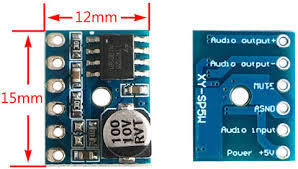
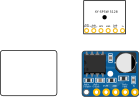
Description: The mono power amplifier module uses the LTK5128 class AB/D power amplifier IC, featuring low EMI and low quiescent current, no external low-pass filter, and efficiency up to 90% in D-type power amplifier mode. The LTK5128’s unique DRC (Dynamic Range Control) correction circuit technology reduces distortion caused by waveform clipping when high power output is reduced. Compared to similar products, the dynamic response is better. It includes short-circuit current protection, undervoltage protection, and overheat protection.
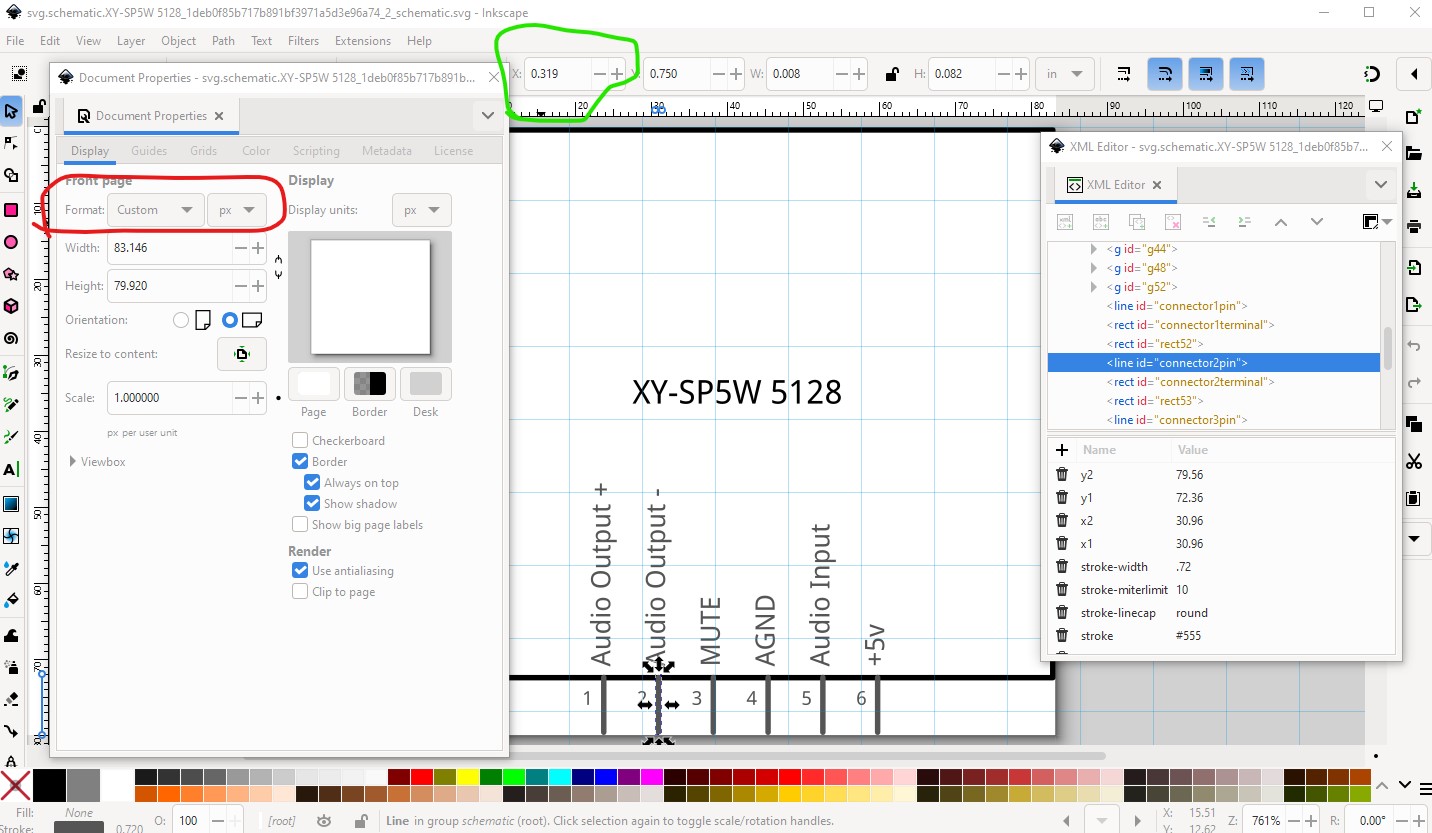
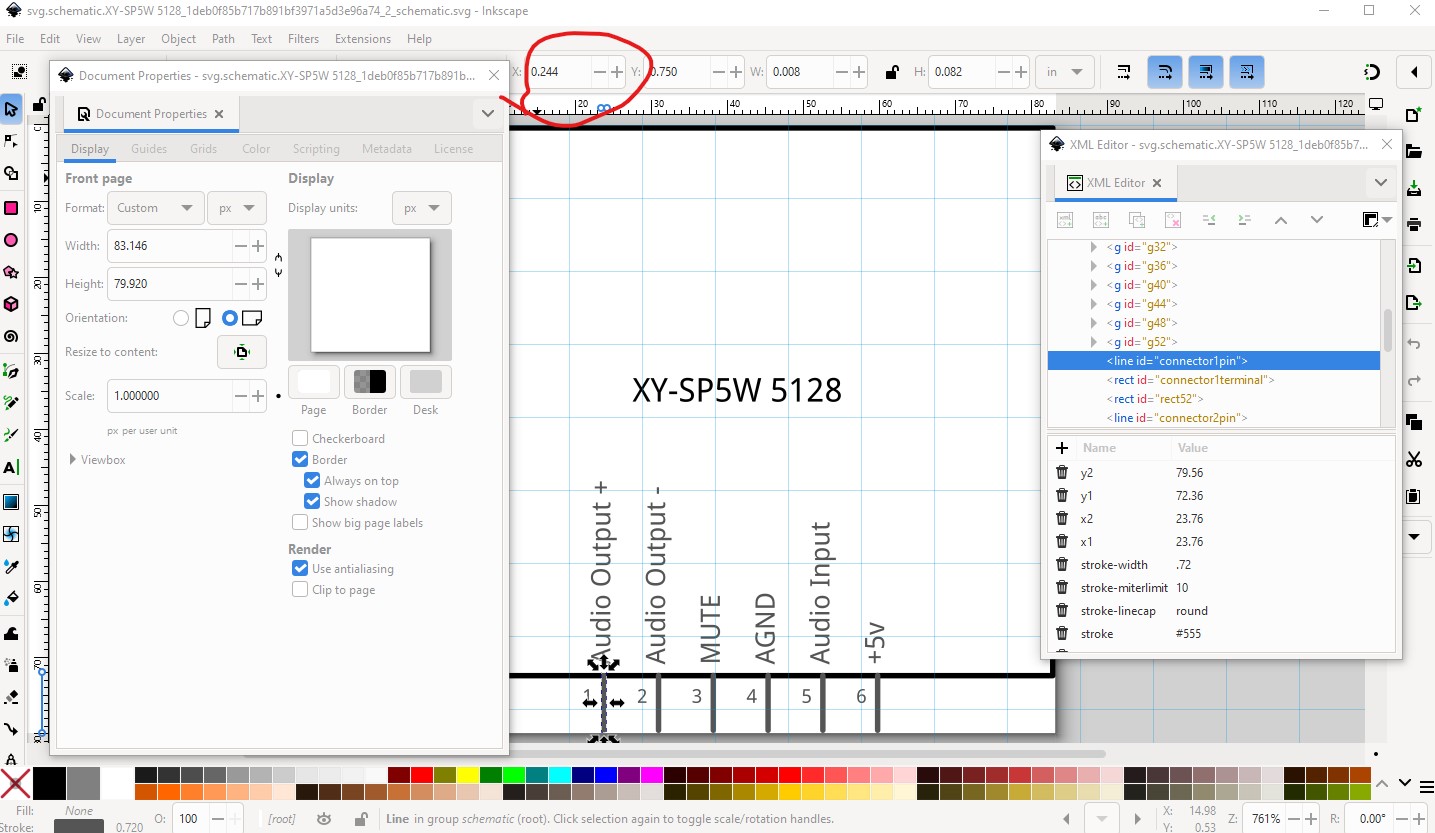
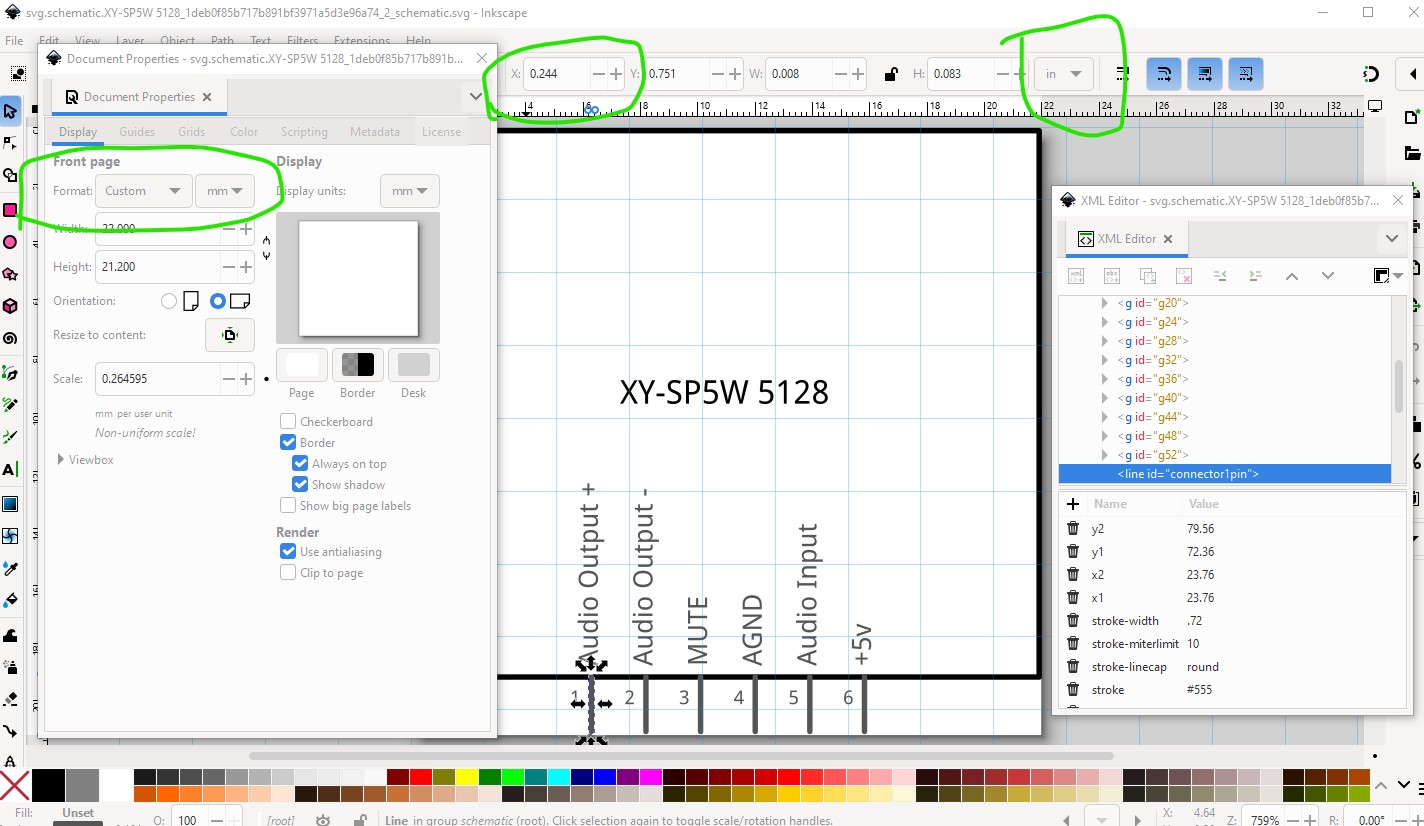
If you are using Inkscape as your svg editor Randy’s schematic extension is the easiest way to get a correct schematic svg. Manually you just need to move the pins to be exactly 0.1in apart
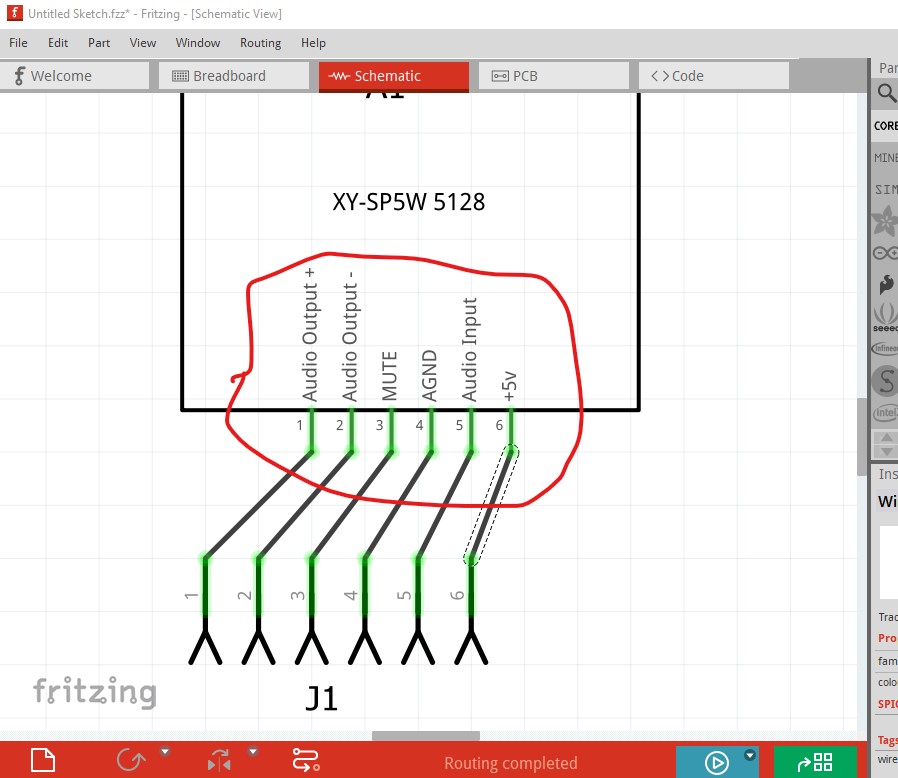
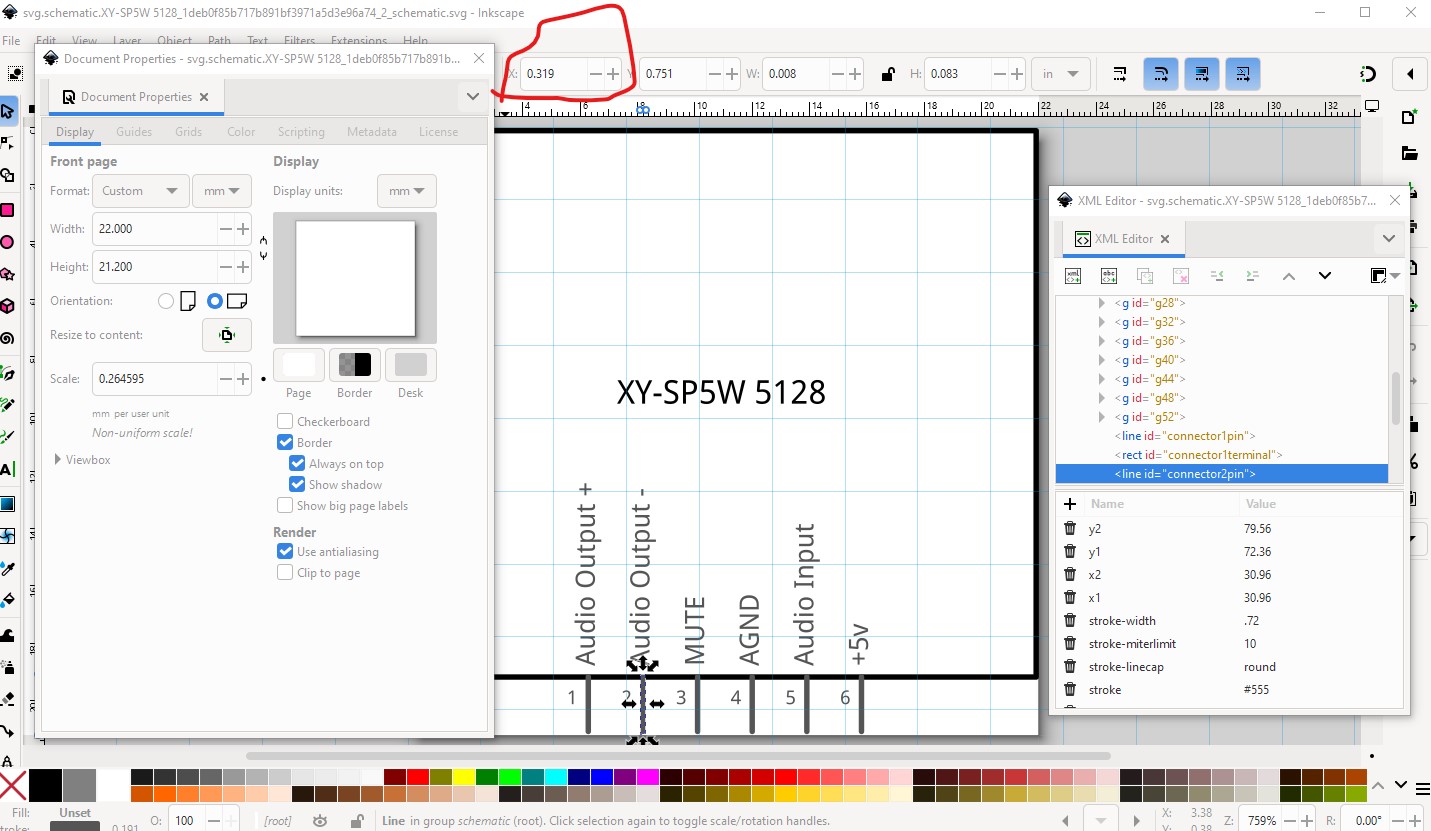
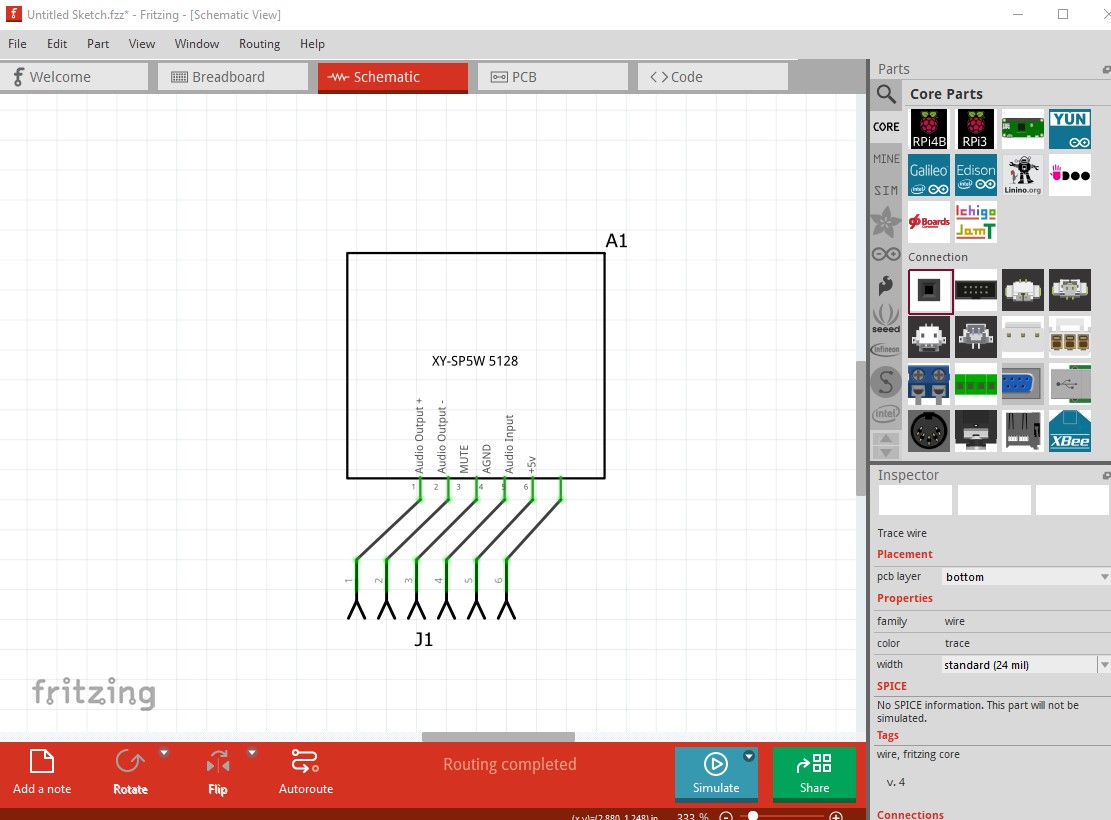
Since the first pins is at 0.244in, the second pins should be 0.344in not 0.319in as it is at present. Just selecting the entire pin and setting them exactly 0.1in apart should fix it fairly easily. FritzingCheckPart.py doesn’t flag this as an error as it doesn’t check the pin spacing.
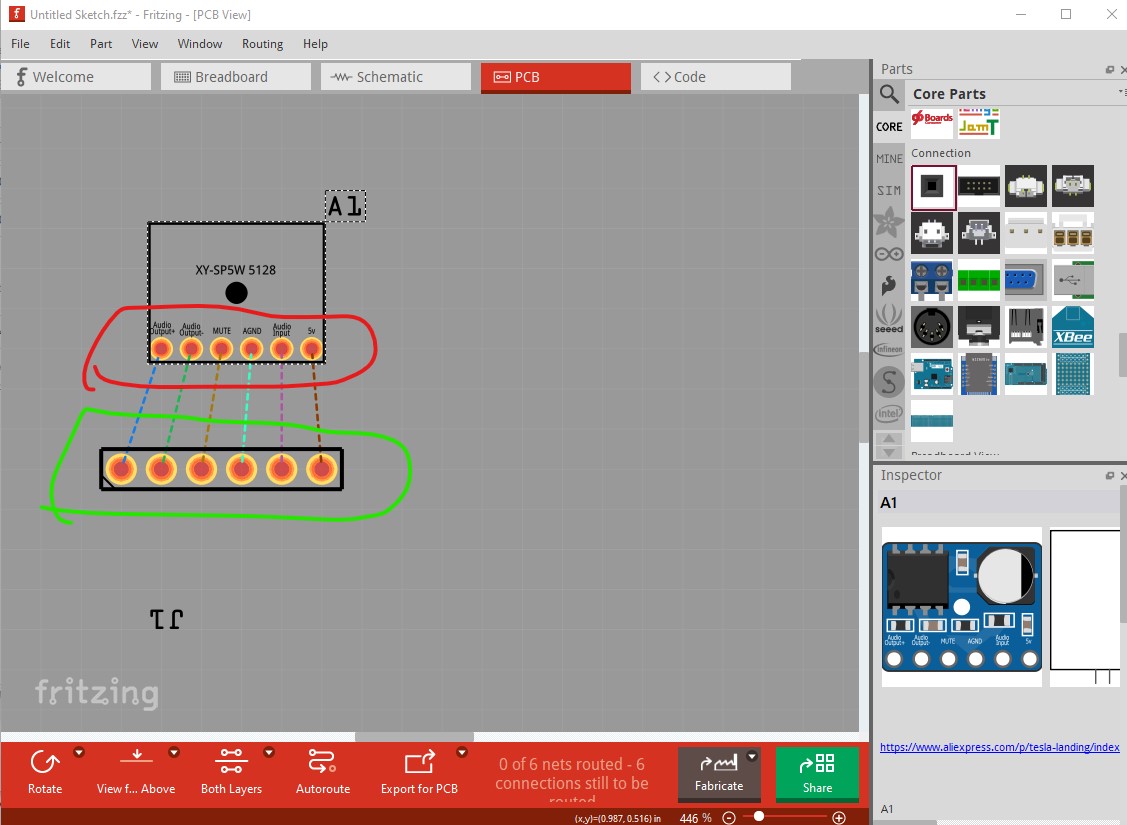
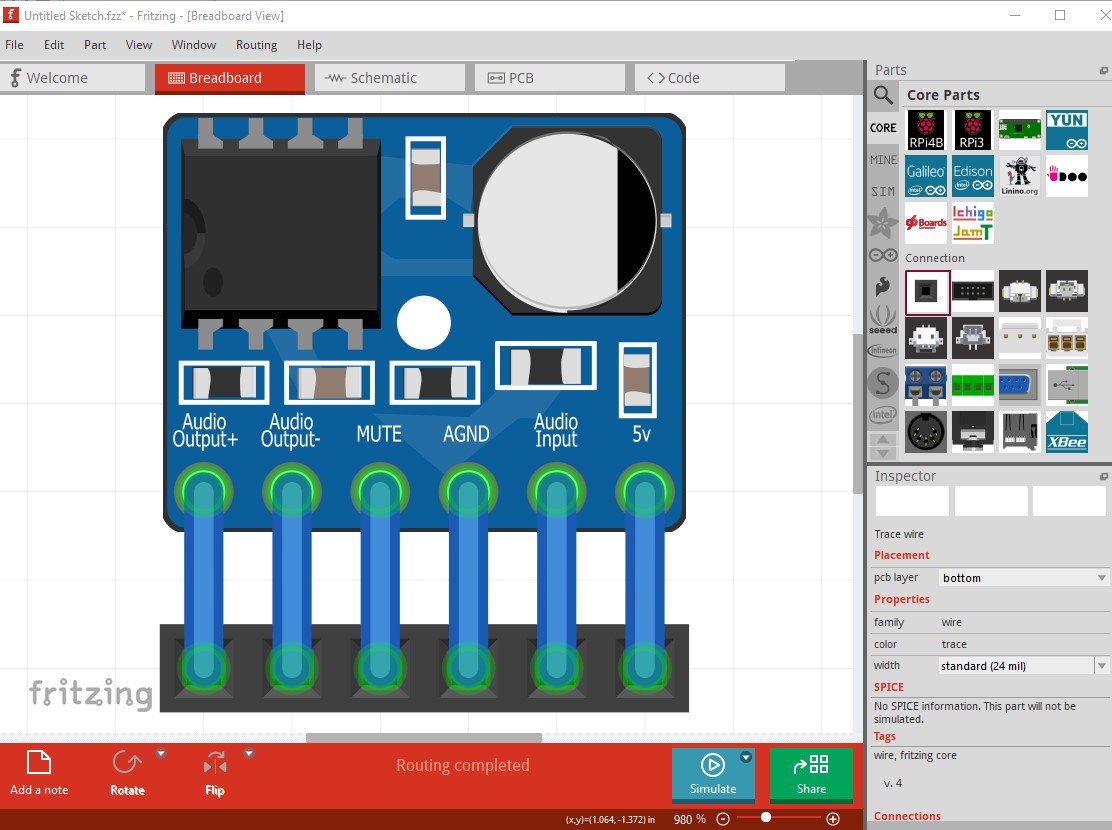
Same thing in pcb, the pins are most likely on 0.1in centers but as we see from the header (which is the correct 0.1in pitch) your pcb is not and thus won’t fit.
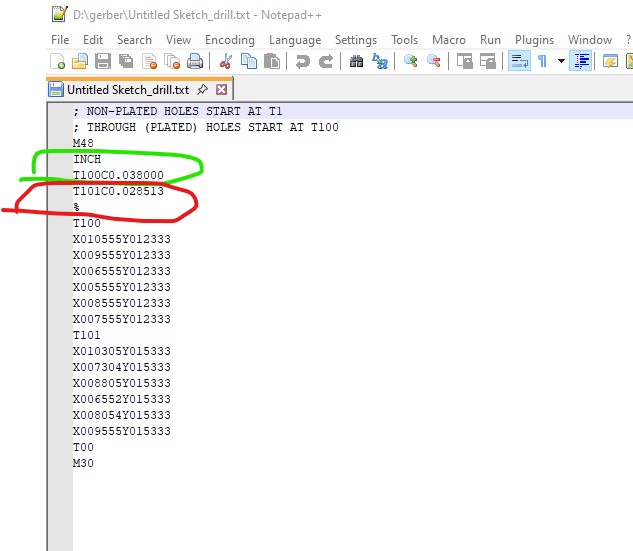
As well the holes are too small. Here I exported the sketch to gerbers and then edited the drill.txt file to get the hole sizes. The headers should be 0.038in but yours are 0.028 (probably because the pads are the wrong diameter because of the scaling) which likely won’t work.
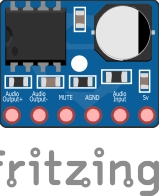
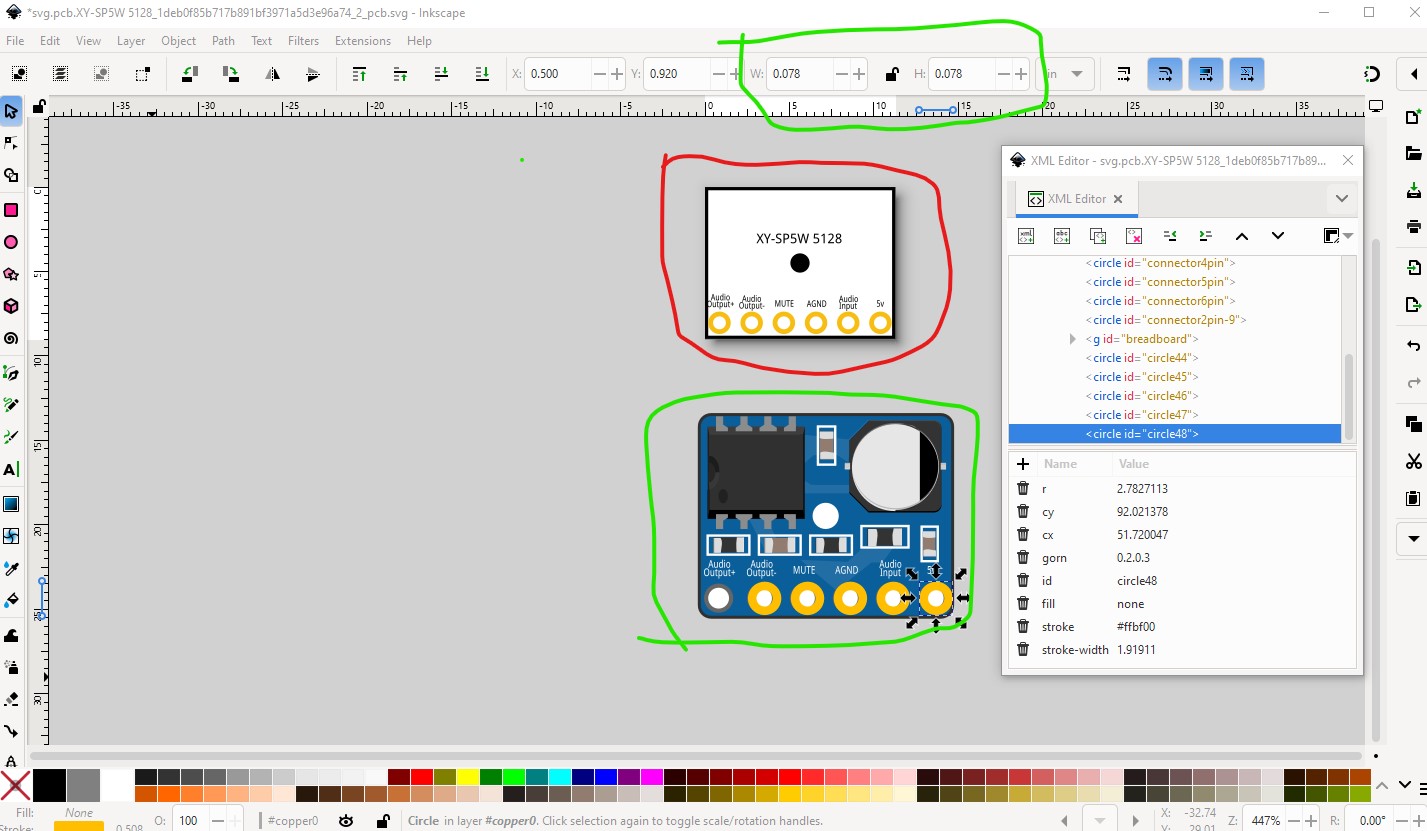
Here (in Inkscape) I copied a correctly sized header pin (the gold circles) and the breadboard svg which matches the correct scale for the pads. As we see the current pcb svg is scaled too small. I often just copy the breadboard svg in to pcb, delete all the uneeded stuff and set the base of breadboard to fill:none stroke: #000000 and stroke-width: 10 as the outline and then place the correct pads
I will upload the actual svg displayed above so you can look at it (right click on the image below and do a save image as to download it.)
On the left I duplicated the board from breadboard and changed the stroke and fill values to what pcb wants to form the proper outline for silkscreen. The gold circles in the breadboard image should produce the correct 0.038in holes in the gerber output.