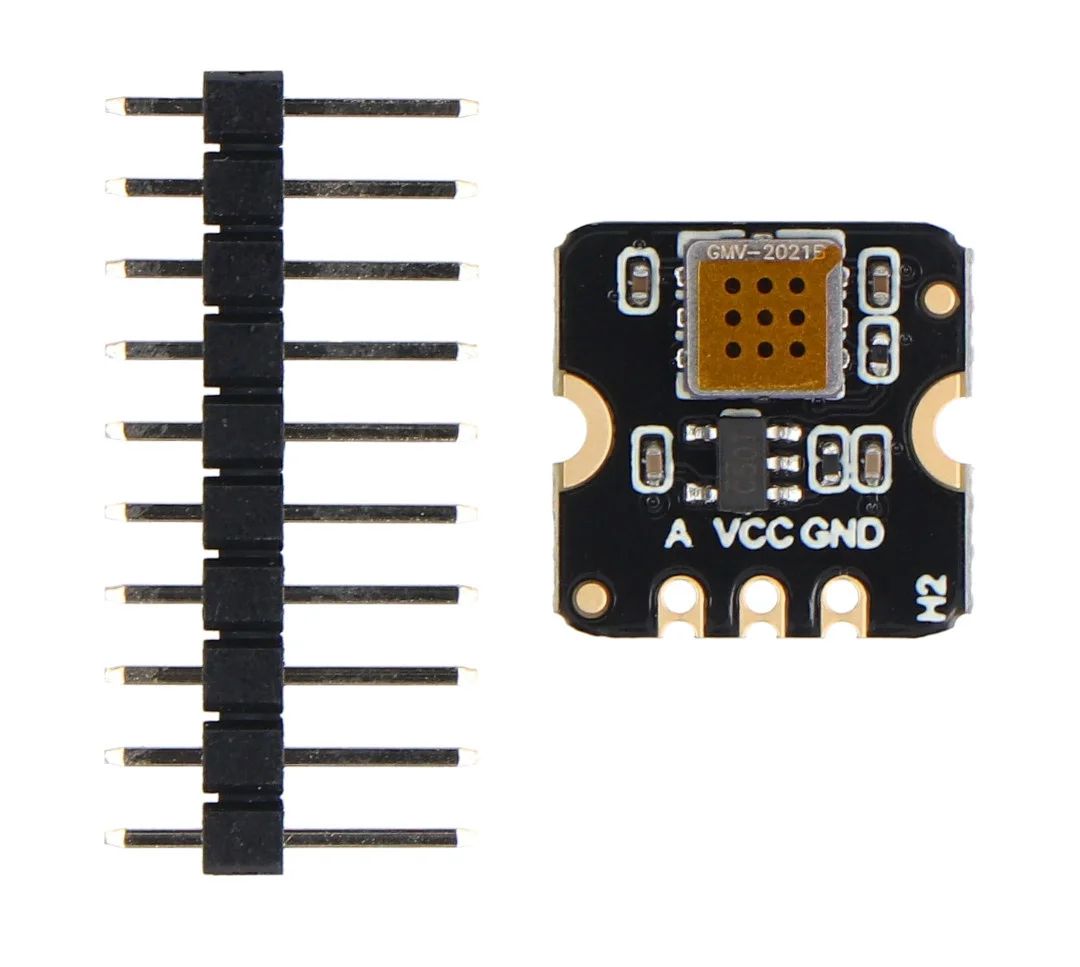
Since this category is mostly used for requesting Fritzing parts, I added a template for this. The idea is to guide users in providing the information that we usually need for a Fritzing part, and also to encourage preparing some basic research and including previous work.
Below is the first version of the template. Should we add or remove anything?
Name of the part
Name
Previous work, similar parts
In case there are similar Fritzing parts, or you already started work, please link it here.
Top view
This picture shows the part from above, so that is easy to see were connectors should go, and which diameter they have.
Foto or vector graphic, no links here please.
Datasheet
The official documentation of the part manufacture is linked here:
Please add a link to PDF of the manufacturers datasheet
Type
I did not read this
Breakout board, sub assembly, plug in module (A)
Antenna (AE)
Battery (BT)
Capacitor (C)
Diode (D)
Display (DS)
Fuse (F)
Hardware , mounting screws, etc. (H)
Jack, fixed part of a connector pair, header (J)
Relay (K)
Inductor, Coil, Ferrite bead (L)
Loudspeaker, Buzzer (LS)
Motor (M)
Microphone (MK)
Plug, moveable part of a connector pair (P)
Transistor (Q)
Resistor (R)
Thermistor (RT)
Varistor (RV)
Switch (S)
Transformer (T)
Integrated Circuit (IC)
Crystal, Oscillator (Y)
Zender diode (Z)
Other (please specifiy)
Footprint
E.g. SOT23-5 , TO-220.
This usually does not apply to breakout boards.
I like this. I requested for the first time yesterday and I looked to see if there was a formal process and did not see one so just mimicked other successful requests as best as possible.
Maybe this is drifting slightly off the primary intent of this thread, but I’d also be really happy if there were a few more things in there, that are maybe to be ‘completed by the developer’, to help identify a consistent way of choosing appropriate values for things like the label, variant and package for a part. That information would help those who want to have a go themselves, if not those who are simply requesting a part (and may not really care, or be in a position to choose how those parameters are set).
There is a discussion about that subject over on github going on (very slowly, there hasn’t been an update since last August, I am as guilty as anyone for not poking at this …) among some of us here:
which is probably a better place for this particular discussion. It is a complex subject and likely to take a long time to settle out to a place where progress can be made.
Okay, maybe can add a few things. Here is my proposed v2 (my additions are in italics)
Template
Name of the part
Name
Similar work, own work, similar parts
In case there are similar Fritzing parts, or you already started work, please link it here.
Top view
This picture shows the part from above, so that is easy to see where connectors should go.
Photo or vector graphic, no links here, please.
Datasheet
Please add a link to the PDF of the manufacturer’s datasheet/website of where the part is taken from. It must state the dimensions of the part and the pin spacing of the pins
This is compulsory
Footprint (optional)
E.g. SOT23-5, TO-220.
This usually does not apply to breakout boards.
@KjellM , @RAPTOR7762 Since the current template doesn’t appear to be working, here is a possible replacement with an example of the information needed and how to find it. I don’t know if this will be too large to be useful but the current one is not working.
PLEASE READ THIS IN ITS ENTIRETY BEFORE REPLYING.
Because if you don't you will get a response of fill in the template correctly with all required information (which will cause a delay in anything being done with your request!) If you read the forums you will see that I am one of the people that make parts. Without the information requested below a part can not be made and you will get the response above.
To find a Fritzing part please proceed as follows:
In this example we are looking for a LM317 module (as opposed to a 317 chip of which there are several) which a search indicates does not currently exist. Requested in this post (which got the response above as you will see, although since I had to find the info to make this post he also got the part!)
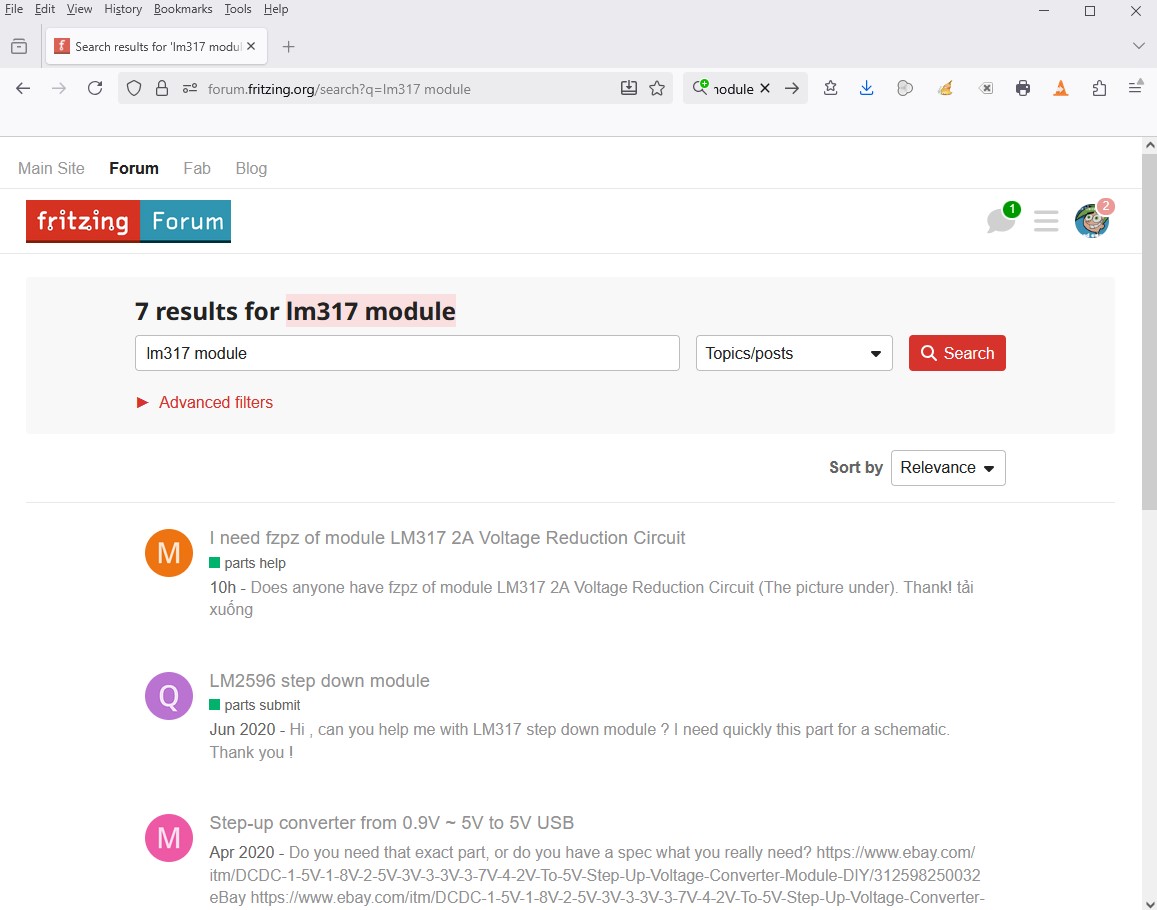
start by using the forum search bar to search for “lm317 module” like this:
Step 1 (optional, Step 2 will include this search and thus may be more efficient and find parts not posted to the forum!.) Select search (blue arrrow) then enter the desired part name (green circle) and select search (red arrow click the icon.) Maybe remove this and just use step 2 as it is where I usually start.
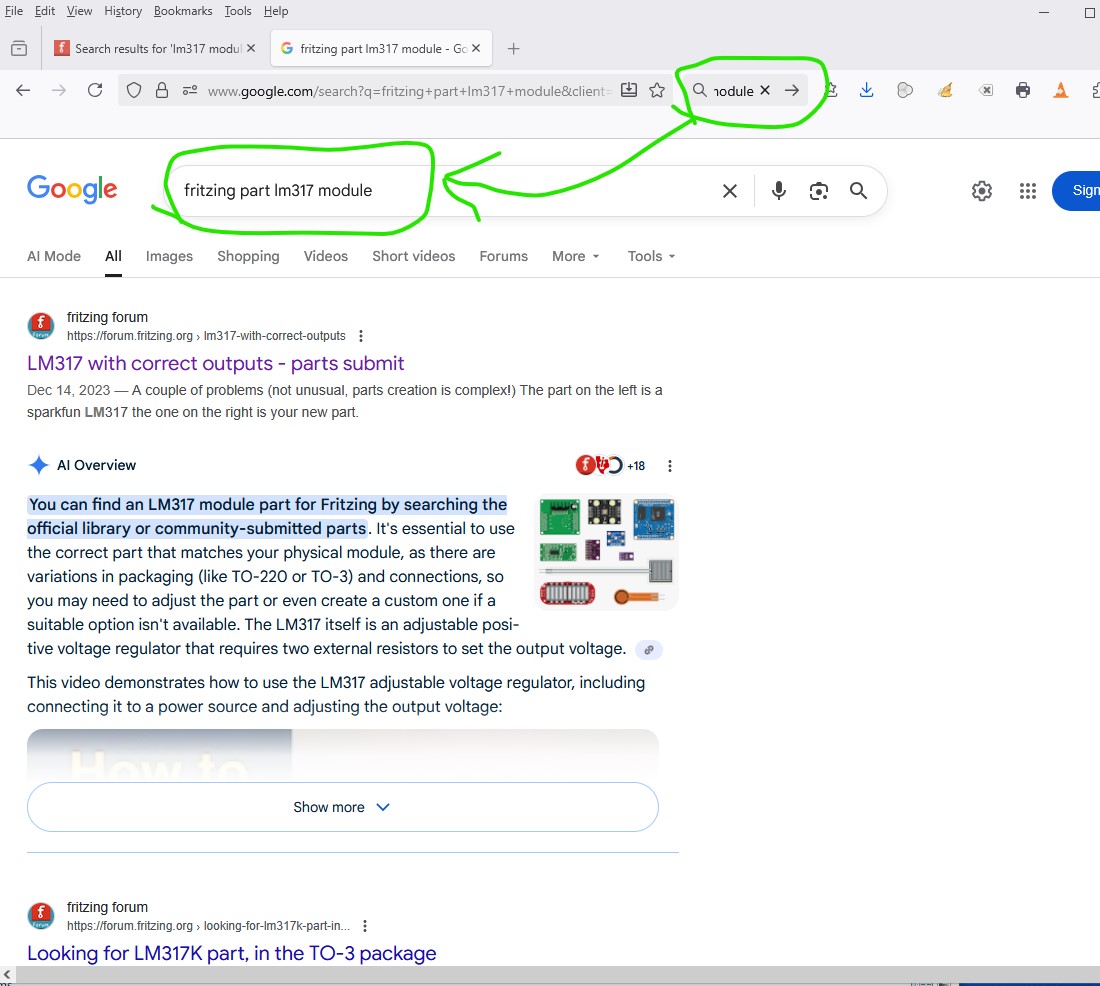
This will include the results from the search of the Fritizng forum and thus is the more efficient way to do it as it will search the wider net as well as the forum. Your output likely won’t look like the image as google searches change from day to day. If you find the part you are looking for in this search be aware that it may not be correct as parts are hard to make correctly and easy to make incorrectly. So try the part out in Fritzing and if it doesn’t work post a request (including the upload of the .fzpz file for the part and preferably the web site where you got it from) in a post to parts help and one of us will likely fix it up for you. If as in this case there is no available part now you need to provide the necessary information to make one.
Step 3
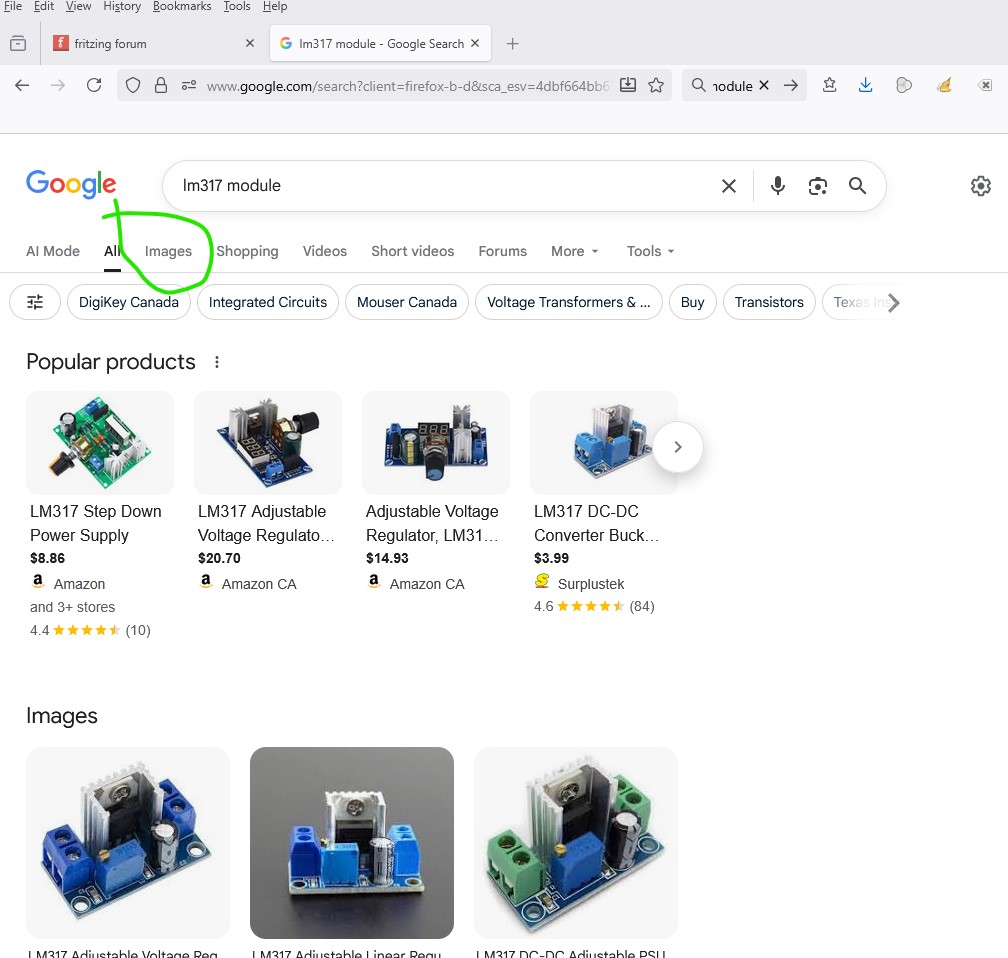
Identify a source of the necessary data to make a part. In this case that starts with a google search of the form. “lm317 module” which for me today produces this (which will likely change for you)
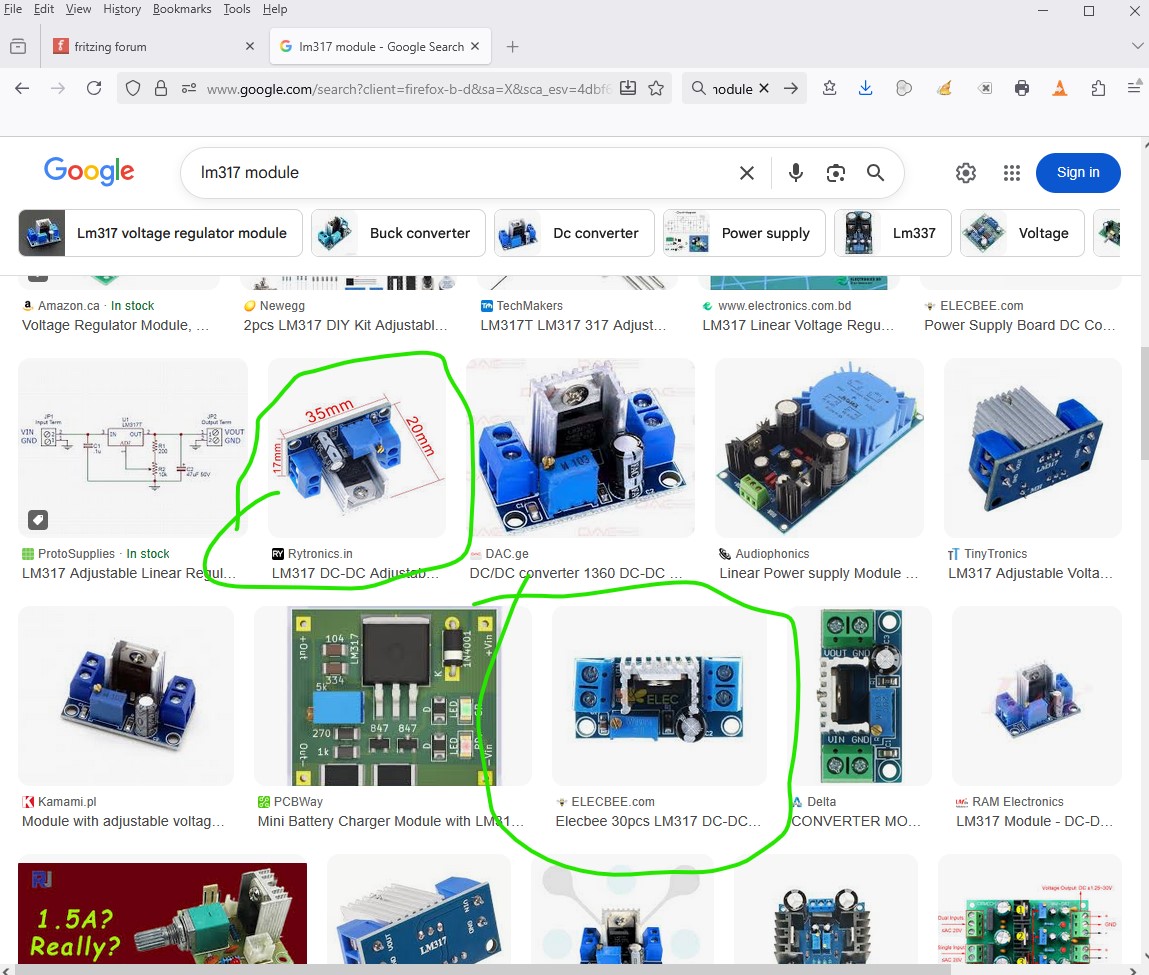
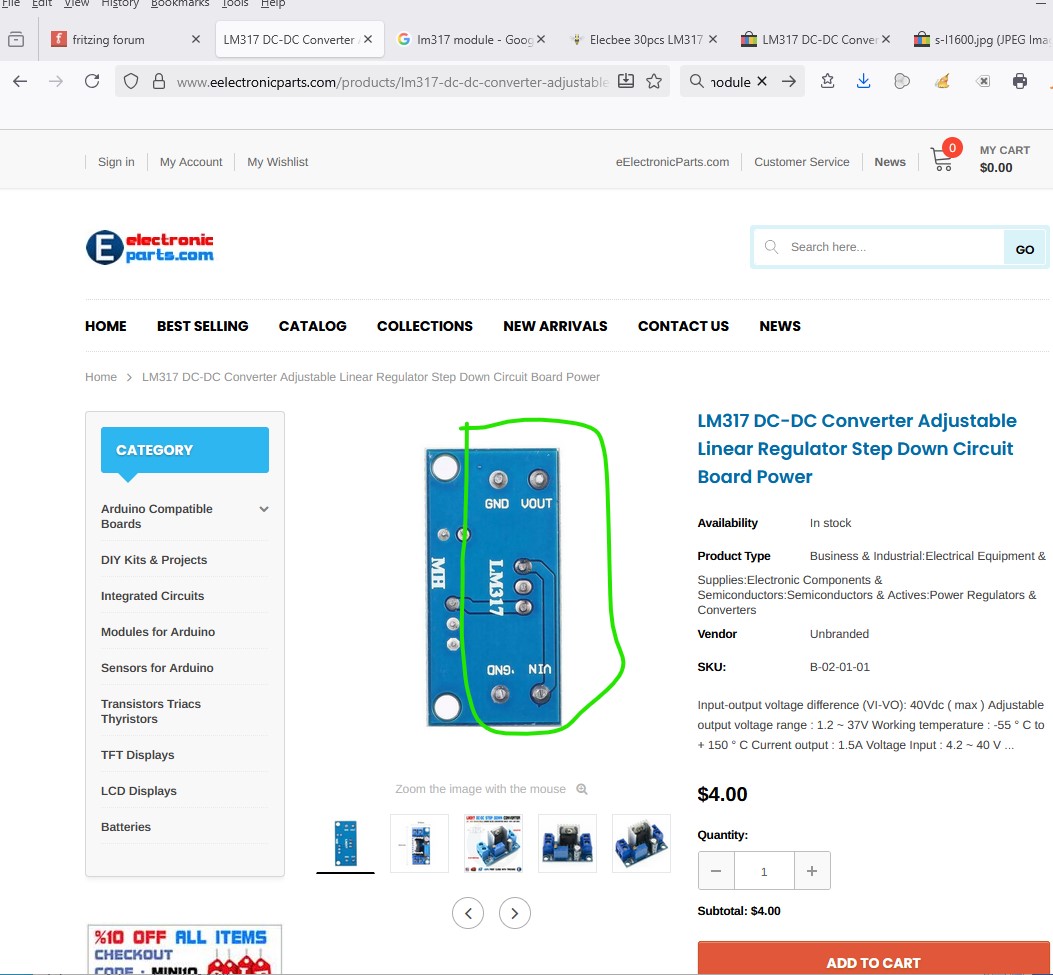
which turns up these two candidates, the first one because of the dimensions (which is otherwise unsuitable because of no flat image as in the second candidate. Unfortunately the second candidate has no dimensions that I can see. A further search (which no longer appears somewhat later) provided this site which has the required information:
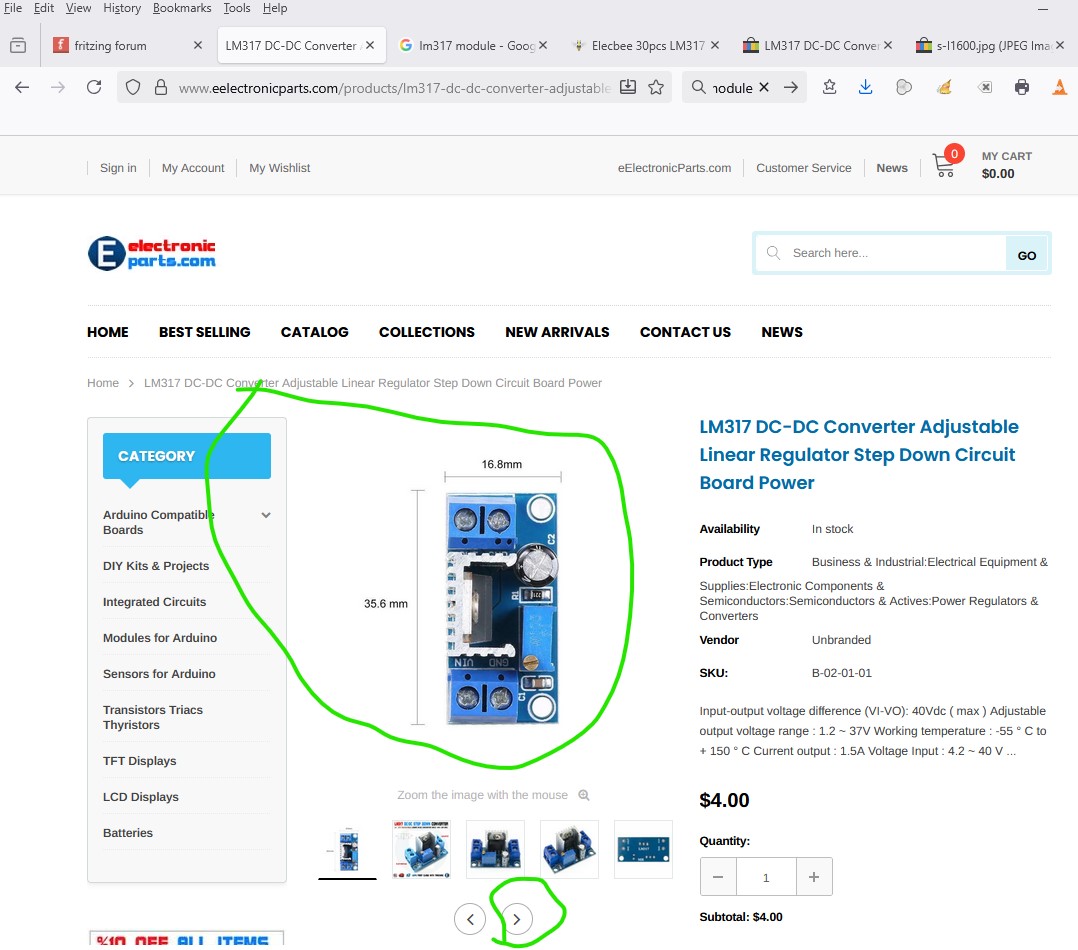
in three of the images: the flat image of the board with dimensions:
This is a sample of the minimum information you need to provide to create a part. It can be difficult to obtain, but you need to obtain it somehow before a part can be made. The flat image of the top of the board (in this case with the dimensions) can and will be imported into Inkscape then scaled to match the dimensions (which may be available as text in the web site as the length/height/width of the part which is also acceptable) to position the parts and connectors of the top view of the board in breadboard view to make that part. Hopefully this supplies an example of the data required to make a part that you need to find. Obviously I could search for this as I did in this case, but usually I won’t spend the time as I don’t need the part, only the information to make it which you who does need the part need to provide!
end of suggested template. Perhaps with this example of what is needed we can get folks to provide the needed information (I have my doubts from the examples that I have seen, but I hope to be wrong!)
Since the current template doesn’t appear to be working,
Do you have indication what doesn’t work? What are the top most problems?
I could think off:
OP (=Original Poster) did not post in the “parts help” category →did not see the template
OP resurrected an old thread →did not see the template
OP ignored the template
OP did not try to search for the part
OP searched for a part, but they still didn’t find it, although the part exists
OP use the template, but the information provided is not sufficient
Edit: I updated the template using your suggestions. Basically I added the statement, that some effort from the OP is expected, and that information is mandatory to create a part.
This tries to address points 3, 4 and 6.
Maybe to help with point 6, we could add a link to a post that provided good data, ready to start working on?
As you say it is mostly 3, 4 and 6 with less amounts of 1 and still less of 5 (although that occasionally happens, but is easy to correct with a search and a post so is of less concern.) A common tactic is to apparently delete the template and either ask for something ill defined or post a skewed and angled (probably to avoid cloning and thus not useful) picture of something without any description of what it might be. It is sometimes possible to do a google image search and determine what they want (although I have seen cases where the image is not online!), but then you need to verify it is actually what they want first which adds clutter and delay. As I said I am not sure this is fixable and we may just have to live with the current method of posting “not enough information” and a list of what is needed as the volume currently isn’t that high usually. A reference post with the examples in a pinned post with a reference in the template may be the best bet, as I expect if the template looks to complex it will get deleted and we are back to where we started so a fairly short template with a link to a post with what we are looking for may be the best bet (I am not much good at web design unfortunately.) The recent post that I built the example from is a good example of what I mean. It is a template apparently deleted, skewed (as I said likely to make it difficult to clone) picture with a minimal description. In that case with the name it was easy enough to find the part in a google search (although less easy to find sufficient data!) and then enough data to make a part but it was a fair amount of work on top of the work to make the part. I probably wouldn’t have done it except that I wanted to create a new template and that was a good example. Hope this helps!
edit:
The very next post from yours is another good example. Template apparently deleted, but at least a decent image which should let me find a suitable part. It may be that having a short template with a link to the required data may help with this (I hope!)
To keep the template short, we can’t include many instructions.
I’ll try to configure instructions in the general description of the parts help category.
For this maybe we can list positive examples. For sure we also have some request that provided all the needed information at the first attempt, so the part could be created without friction or uncertainty?
The template now clearly announces that a part can not be created without the information.
Someone who doesn’t read even the first phrase in the post doesn’t really deserve much attention. From my point, this could even be bots just asking for a part to earn credibility in the forum (ok, a bit paranoid, but spammers really use this trick).
If a visitor clearly ignored the template, and as a result, his request can’t be answered, it makes sense to flag the post and delete it, with helpful canned response.
For example the canned response could look something like this.
"
This request did not provide sufficient information for creating a part.
Please collect the necessary information and write a new request using our template. Title Top view Technical datasheet
"
I think the goal should not only be to help the users fast, but also to save your time and energy. And by keeping the forum clean from lazy requests, there will also be a greater amount of positive examples. If we show that a part will be created after someone wrote “I need part XY-123 for my project, HELP ASAP please!@” … well we will probably get more of these requests.
OK I went back over the last 20 or so days of part requests and rated them, which may help setting up an example posting that can be linked to. I have had years of experience in searching for information for parts so I am probably not a good example of how to do it as it is pretty much instinctive for me by now. I’ll try and demonstrate why some of the posts are not useful as that too may help. Here is a list of the latest posts (with their forum link) with good and bad points listed
The post for the LCD display that you unlisted. Being able to do that automatically if there isn’t enough information would be good but I expect may turn out to be difficult!
Good
The image linked in the post. A google image search turned up a web site which has everything needed to make the part (better would have been for him to provide this web site!) I have a part mostly made now and will wait to see if we get a further request.
Bad
The web site claims in one of the images that the board is 5cm x 3.4cm (i.e. 50mm x 34mm) but the mechanical drawing further down the site says (and is correct) that the size is actually 56mm x 34mm (which matches the scaled down top image perfectly where 50mm is too narrow in x.) Sloppiness in the web sites makes this fairly common. We want to give examples like this site of the information required I expect.
Good:
Flat image of the desired part. Although no dimensions shown, they could be found by scaling the image to match the 0.1in connectors and using that to imply the size of the board.Unfortunately if the headers are not 0.1in (i.e 2mm or 1mm headers) that won’t work
Bad
The data sheet supplied is for the drv8833 chip not the board itself. It is indeed the manufacturer’s data sheet but in context of the board not useful. The part turns out to be a clone of the Polulu part listed in the reply post, but it took me quite a while (although I remembered making it and knew it likely existed, I didn’t remember what it was called and it took me a while to find it.) A web site that sells the board itself (probably the website they bought the board from) would be the useful data there. That is likely to have the connections and the size of the board, and if not at least enough information to search for other sites that do have the necessary information.
This is a good example. It includes images of the board (although they are redundant given there is a link to the manufacture’s site which has the images as well as all the necessary data.) The ideal solution would be to get the link to the manufacturer’s web site as it contains all the necessary information. Unfortunately that isn’t always the case (which may only become obvious when you try and make the part.
Good:
A clear part name where I could find the manufacturer’s web site (although them supplying said web site would have been better)
Bad:
A very complex board that will be hard to make and large and likely doesn’t have a large interest (illustrated by the first request coming 2 years later.) We will see if there is any reply to @RAPTOR7762’s request, hasn’t been one so far and I am still of the impression this is likely too much work for too little gain.
Good:
Link to manufacture’s web site which contains all the information needed to make the part.
Bad:
Pretty much nothing there was sufficient information there to make the part.
Good:
Link to the manufacturer’s web site with most (but not all!) data needed to make the part.
Bad:
The part is really two parts, the relay and a socket. The relay is documented, the socket is not (no pin out diagram that matches the relay data sheet.) It looks like how I guessed the socket connects is in fact correct, but there isn’t much anyone can do about it when the data just isn’t available.
Good:
Link to manufacture’s github site with all the connection information required. However a google search for the part name turned up an existing part so nothing needed to be done other than provide the link. A google search would have cleared the need for the post.
Bad:
Pretty much nothing.
Good:
Link to manufacturer’s web site with the data needed to make a part.
Bad:
Not much bad about it, although the part is of little practical use I expect, it wasn’t all that difficult to make.
Good:
Not much. Little indication of part number (although they are there in the images) no data sheet and a search for the specified model number on the JST site doesn’t come up with an SMD connector as pictured but rather a different connector. I had missed answering this post so have replied requesting correct data.
Good:
Nothing I can see.
Bad:
Tilted picture of the part with no data as to connections (other then a 3 pin phone jack.) A google search for “Fritzing part current transformer” turned up several hits and there has been no further posts so that may or may not have helped.
Good:
Link to site where you can buy the part plus data sheets and pcb layout information
Bad
Data sheet confusing enough that I initially screwed up the part, but not the poster’s fault.
Good
manufacture’s name and part number (but no reference to their web site)
Bad:
No link to the product web site although that didn’t really matter here.
Bad:
tilted image of the requested part, no web site or physical dimensions supplied.
Good:
supplied the necessary information to make a part after prompting to fill in the template.
Good:
manufacture’s data sheet supplied which resulted in a created part.
Bad:
Nothing in particular.
Good:
Not much of anything.
Bad
Image of the part, no connection information, no physical dimensions. A request for more info got connections but no physical dimensions. A request for a web site (as I recall a google image search does not find the device) has gone unanswered so I expect this is a dead issue.
Good:
Nothing in particular.
Bad:
Several pictures of a power supply of some kind but no connector or dimension information. Supplied the link to the lab power supply in core parts and no further information forthcoming.
Good:
Link to manufacture’s data sheet supplied which meant a google search found an existing part (the google search being done would have eliminated the post before hand though.)
I’d consider posting an image, ideally the top view image, of the part more important.
We can not rely on the link alone.
It might appear redundant. But it just takes a few seconds to take an image and post it. For this we get a much clearer request.
Why I think posting the top image is important:
Post stays readable a few years from now
The link might go down, or even lead to a different part (for example if it was a link to a shop).
Browse the forum and see the part at first glance
Users should not need to click on many obscure or outdated links when looking through search results.
Avoid mixups
E.g. when posting the link to a chip, when the request was actually about a breakout board for that chip.
Top View for connectors, dimensions, and visual features
Last but not least, the image in itself is helpful for creating the part. If the link to the manufacture datasheet duplicates some of the information, that is fine, it just shows we are working on the correct part, and not some revision or clone that changed the size, swapped connectors, or added a connector.
Cheap clones
I guess you are already responding with suggestions for similar parts, and in any case it doesn’t affect the template.
But still want to mention:
Often we get requests for poorly documented cheap boards, while at the same time really good documented variants from brands exist.
The LM317 is a good example for that. There are tons of LM317 breakout boards, with varying quality, and you are unlikely to get the same board again if you try to buy it one year later, or don’t know the exact shop it was bought in.
So, in this specific case, instead of creating a “single use” part, maybe we can post a hint about similar parts? The OP still can reply if they need one specific design, but they might also be happy to learn about better documented alternatives.
This one seems like a good replacement, using MIC2941 instead of LM317 (lower dropout voltage → less heat)
Along the same line, I have suggested that when the difference is just the look in breadboard view, that an alternate part can be used, then load an image to overlay. Many people can scale and crop an image easier than creating a custom part.
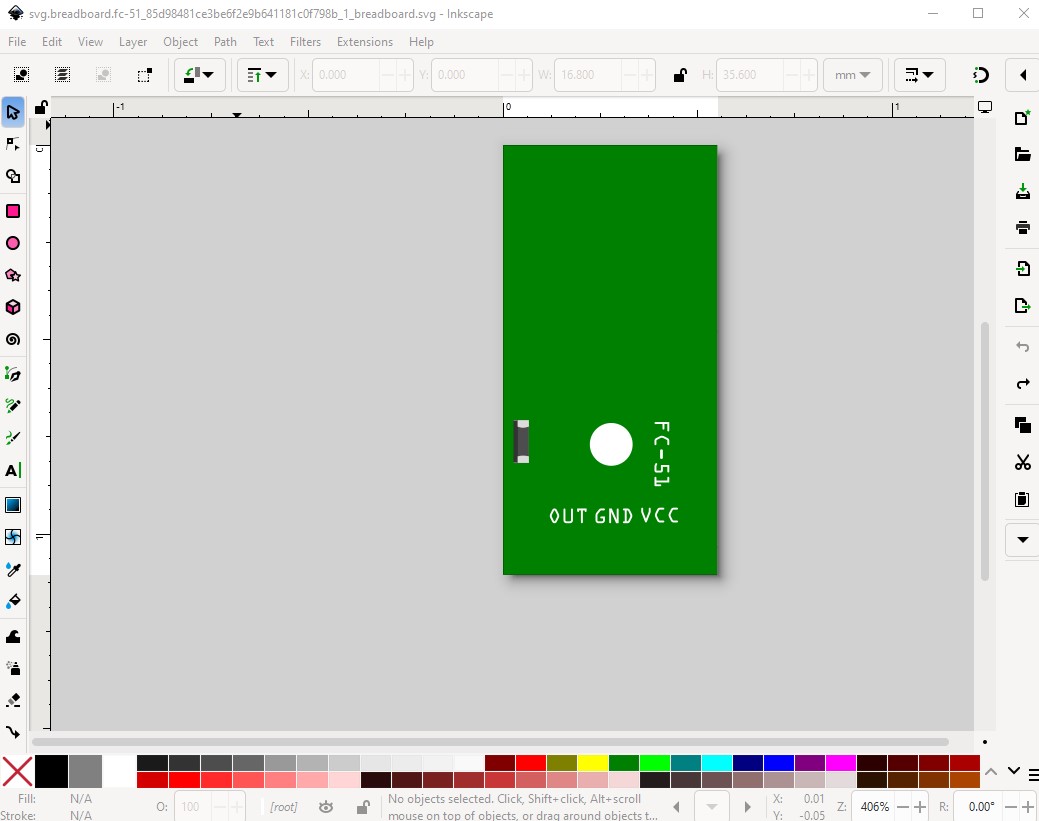
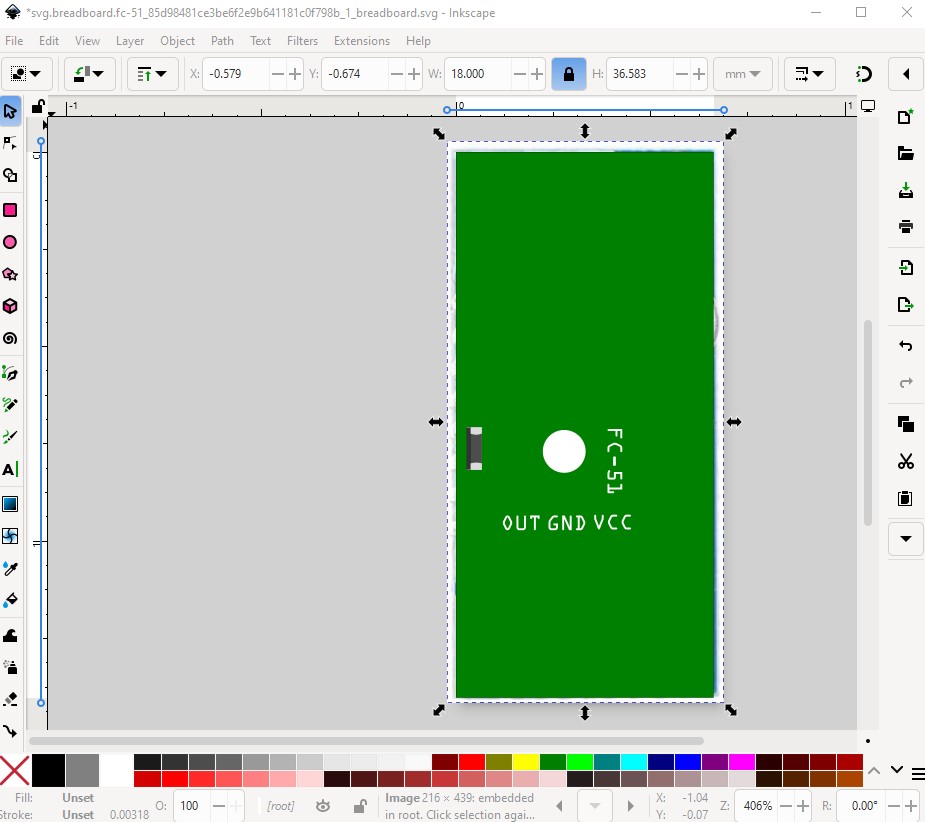
I would agree, here is how I use that image to make a part which may help people understand the importance of both that image and the physical dimensions of the part.To make a part I start from a template breadboard svg which looks like this:
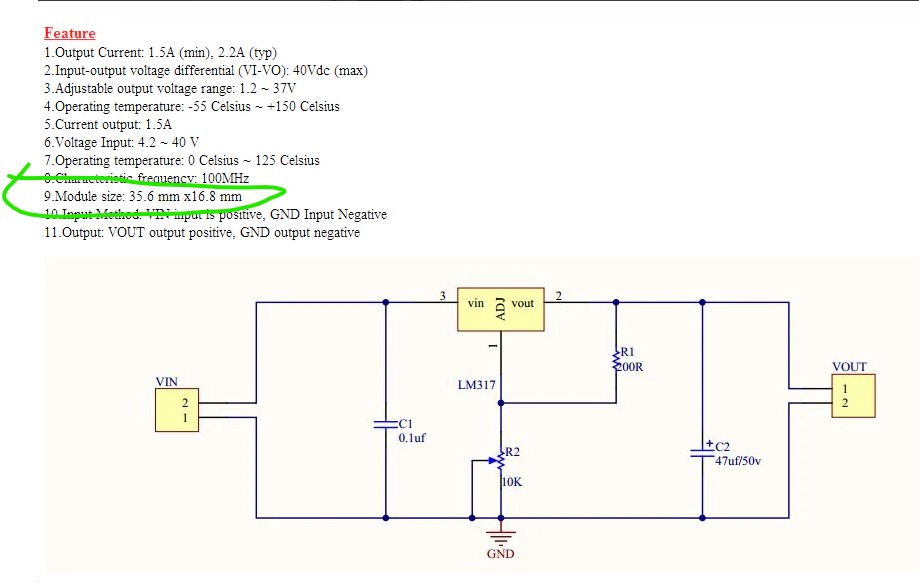
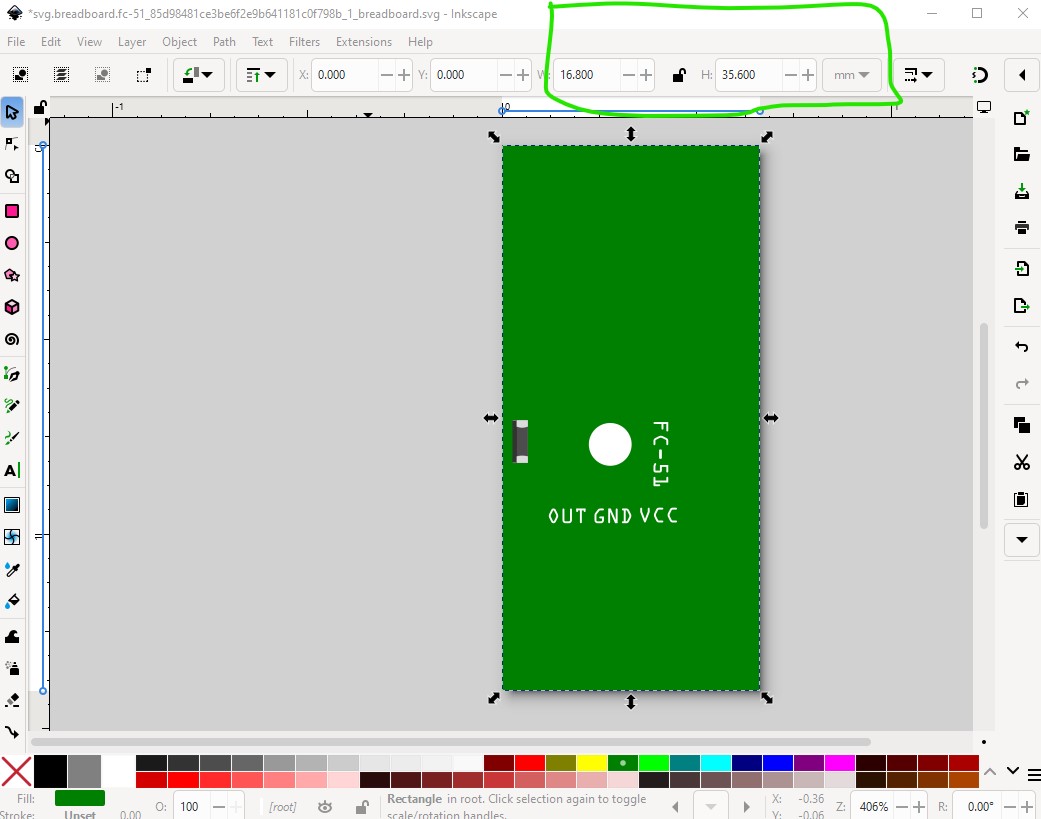
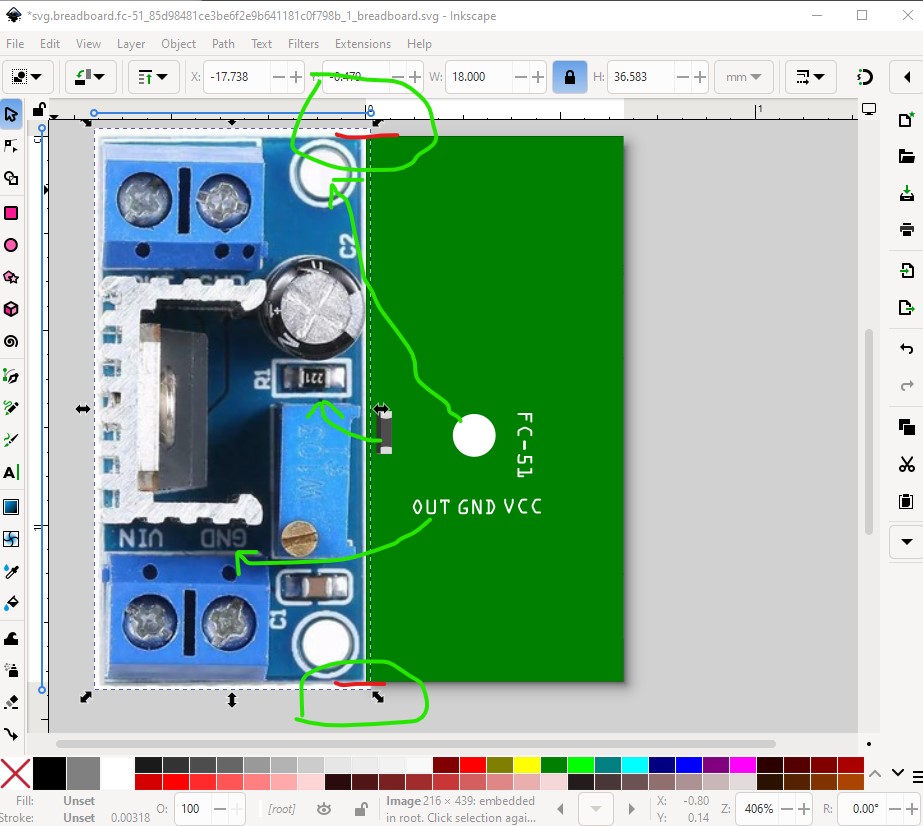
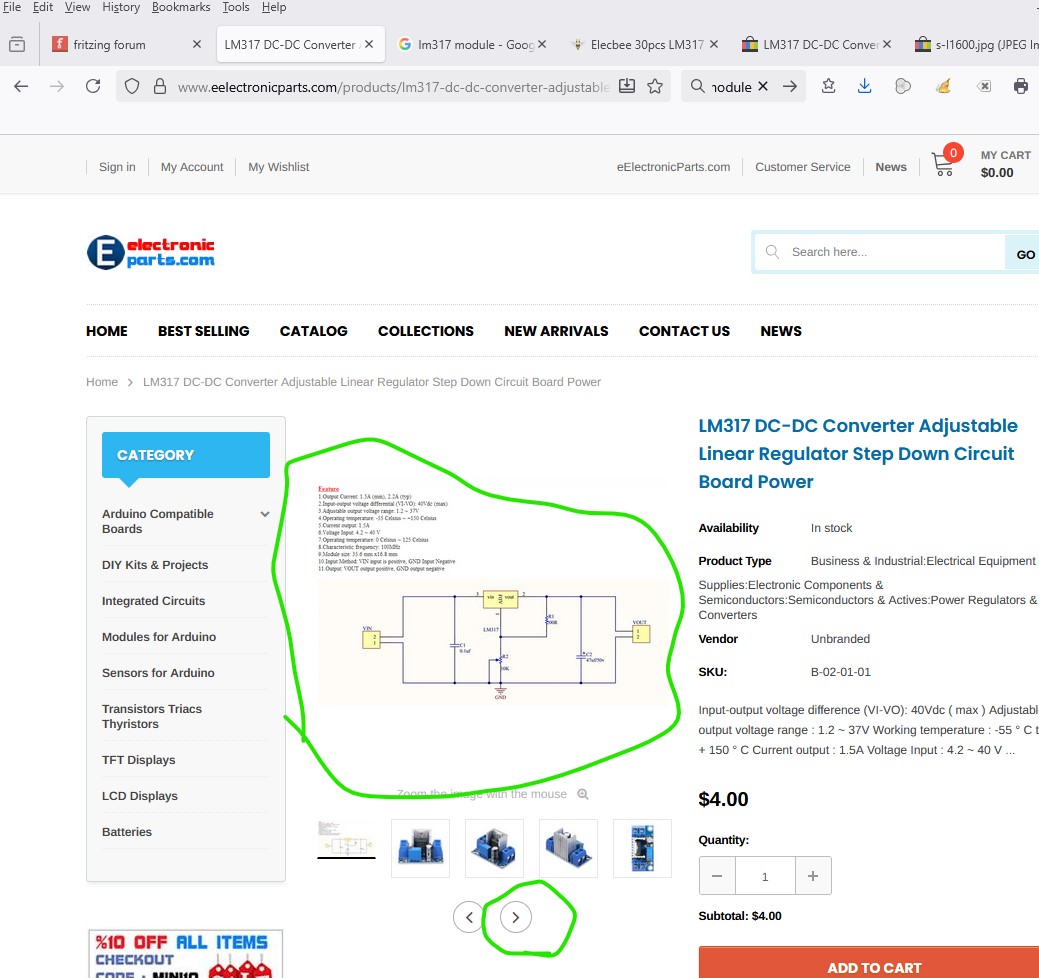
Next is determine the physical outlines of the board, in this case that is text in the schematic image from the web site (circled in green here.) We need the physical dimensions (preferably accurate which can be a problem) of the board to be able to potentially scale the image of the board.
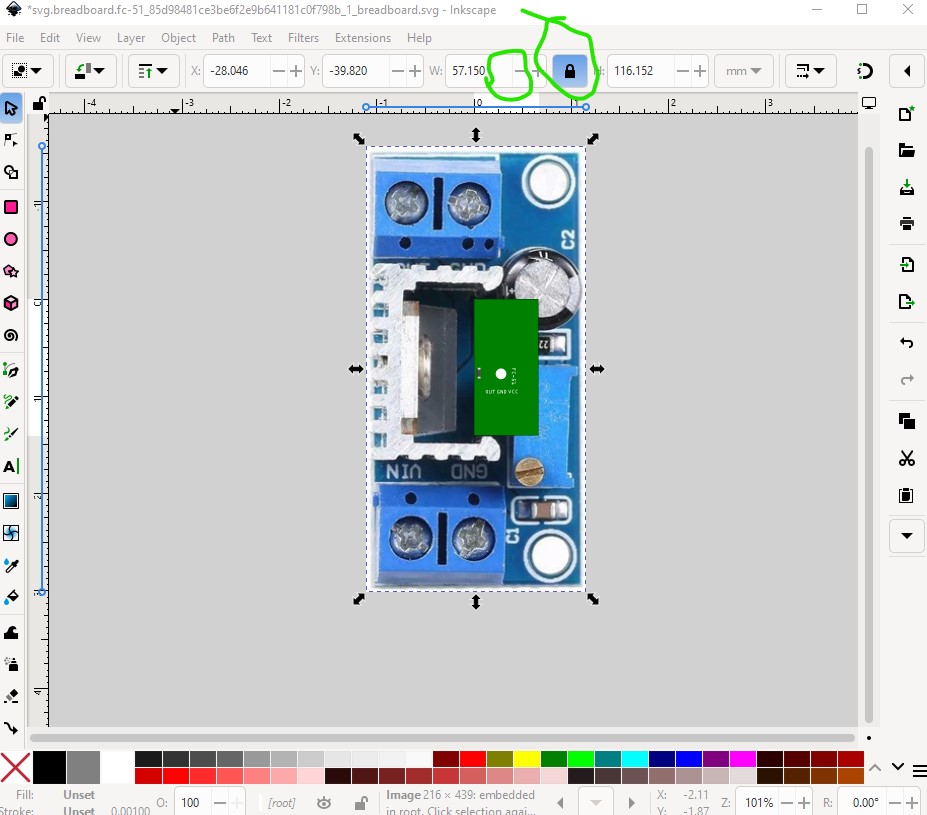
Here the image is larger than the correctly sized green board so lock the x and y coords in Inkscape and use the decrease with toggle to scale the image down to match the green board. In this case the image of the board matches the image of the outline so I can just align one on the other. Sometimes I need to scale the image to match the physical outline of the board if they are different (which in turn depends on the dimensions being correct!) I scaled the image so that the red lines circled in green match the image
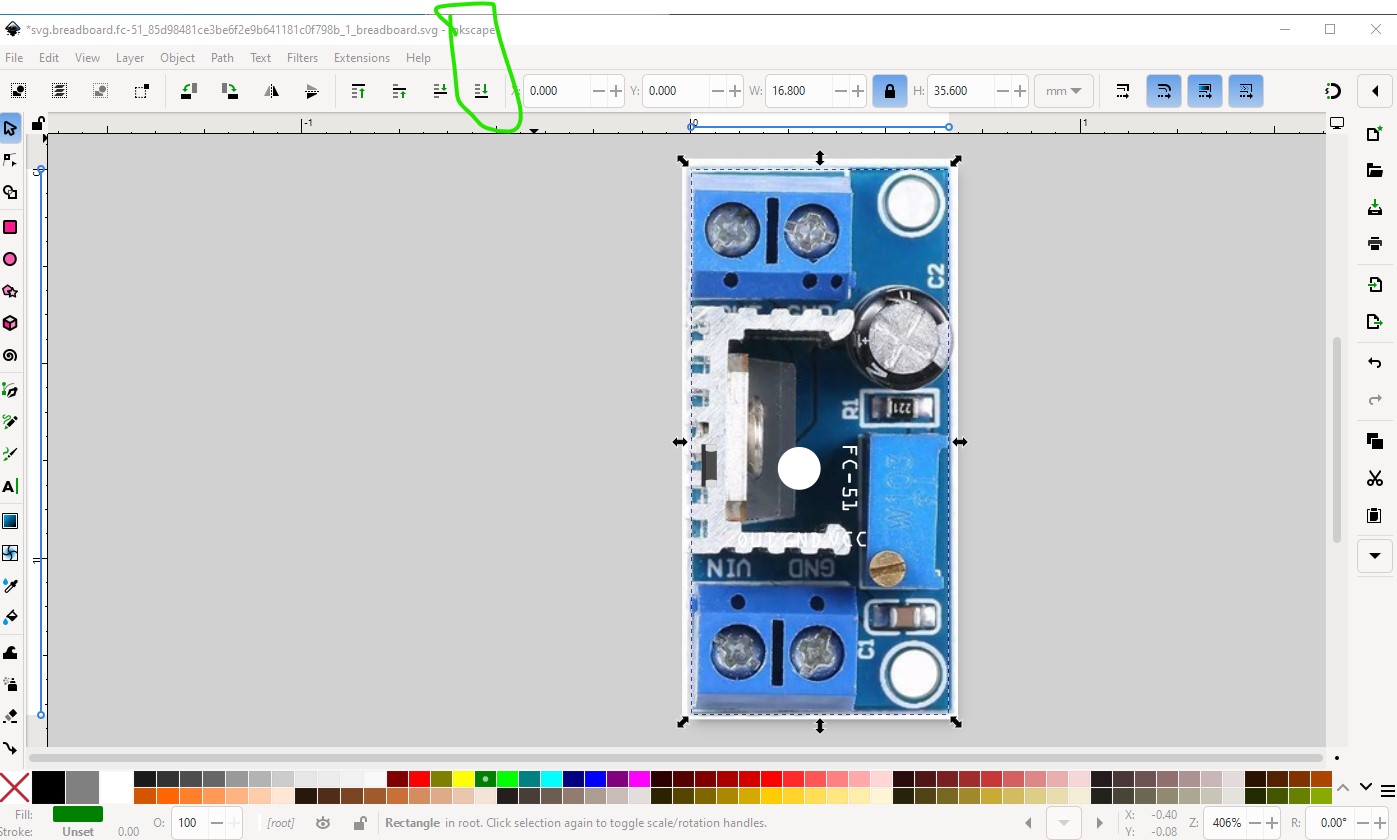
I this case the image matches the board so I didn’t need to move the image in or out to match.Next overlay the image (currently under the board) with the board then move the board to the back.
Here the image is now above the board and I can move the mounting holes and resister (duplicating them as needed) and adding other components from my collection of breadboard components to make the breadboard image.
Basically drag the added components in to the board (using real parts with connectors included for the screw terminals) to make the full breadboard svg. I’m hoping that this explanation of why we need the data requested may help get that data but I guess we will see.
Here are examples of the data needed to make two recent part requests (which neither request provided directly!)
The supplied image is at an angle and thus utterly useless to make a part. No other infromation provided, template deleted. The request for a data sheet got this dfrobot site:
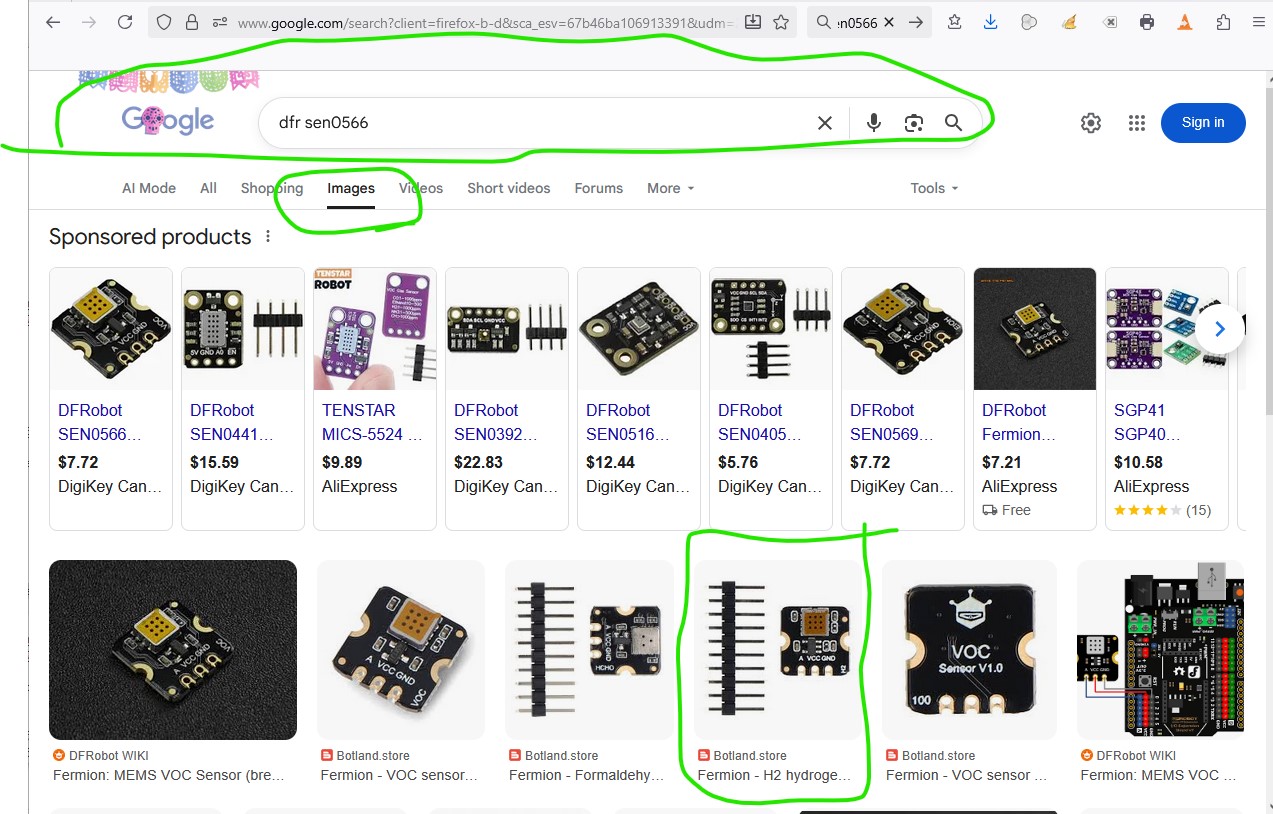
but note the part layout is wrong! The sot23 shown is in fact from a flat image below a s0t23-5 (quite different!) To resolve that I needed to do a google search for “dfr sen0566” then switch to images and look for a flat image of the board (circled in green here)
which provides the placement of the components (and the fact that the sot23 in the dimension drawing is in fact a sot23-5!) which enabled the part to be made. With the dimensions the jpeg can be imported in to Inkscape then scaled to match the dimensions. It is then possible to use the jpeg to construct the part but we need that much information and it is preferred that you provide it because I often won’t take the time to search for it (as I don’t particularly want the part) that is up to you, your chances of getting a part are much better with adequate information.
The next example is this post
the supplied data sheet does not have the necessary information but the polulu web site does like this:
which yields these two documents which provide all the required information, in the resources section of the web site is
which provides a complete mechanical drawing with dimensions of the part and in the pictures section this jpeg image of the board which details the connector and component placement. Often web sites will not have this information, but then you need to use google to search for both sets of information (the physical size of the part and the flat not rotated image of the layout of the board) in order to make a part. The pictures area of the web site provides this jpeg image of the board which together with the mechanical data above provided enough information to make the board (although it took a couple of days to make as it is a large (107 connectors) complex part.
Hopefully we can somehow indicate (probably via examples like this as nothing else seems to be working!) people to provide the necessary information to make a part without having to ask specifically for it. I recognize (because I often have to do it!) that this information is difficult to find but you won’t get a part if we don’t have it.
 it here.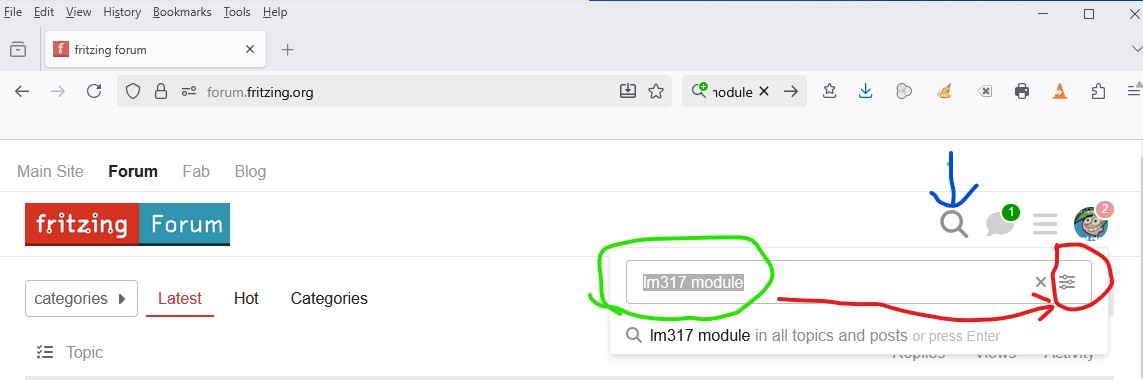
 Title
Title Technical datasheet